

1 min readWhen The End Really Isn’t
by Guy Gage | October 18, 2020 | Business, Leadership, Performance, Personal Management
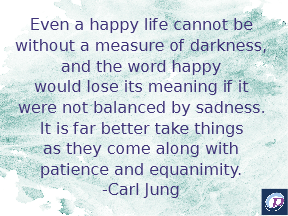
Under Normal Times
As a professional whose career is cyclical or seasonal, you have gotten used to the normal ebb and flow of the job. And at the end of a long, intense project or season, you have developed a routine to recover and recharge.
For instance, you may take time off. Or you may arrange a lighter schedule for a few days. Or you may put your office back in order at a leisurely pace. Whatever your routine, it has worked for you over the years and should work now.
But maybe not.
This Time is Different
Just because the season is over, other things aren’t over. For instance, the future of your work will be like in the future is just beginning. Leaders are having to make decisions about their business model and approach: whether or how much to allow remote work, how much of an office footprint will be needed, where to find talent, how to satisfy clients, keep staff engaged, and how to conduct business in a socially distant environment.
Add to that, we are all in the middle of the season of Covid. That means you are still in the weary grind of hyper vigilance for your health. As much as we want to hope for relief in the short-term, this pandemic is likely to drag into the early months of summer next year. And who knows what social and economic adjustments will have to be made?
And if that wasn’t enough, the presidential election has elevated to a feverish pitch, causing a heightened angst that had everyone on edge. The contentious issues are polarizing. The uncivil, disrespectful tone is so un-American and so “not us” that it bears heavily on our souls.
Finally, you are in the middle of your own personal situation. For instance, you may have concerns about the children in your life who are wrestling with their social and educational needs. Or you may be anxious about the health of the elderly in your family, or your own mental and emotional well-being. Or all the above!
Be Understanding
The point is this—it is unlikely that your normal recovery practices will not be enough because of so much that isn’t ending. You will have to take additional measures and it will take longer.
So be patient and be kind to yourself and those around you.
- Allow for others to be less than their best.
- Lower the intensity of your life by practicing simple things like slow your breathing, consciously accept and enjoy this moment (and the next)
- Remember to acknowledge and express gratitude.
Allow yourself to take extra care to recover because this time is different.
Read Related Blogs:
Lead Through Uncertainty
In a recent firm presentation, we explored what leadership looks like today. One thing is clear: this is a new day, very different from the environment in which most firms operated over the last 50 years. The pace of change is extraordinary. No sooner do we absorb and...
AI Won’t Replace Relationships. But Relationships Will Matter More Than Ever.
Over the last week, I’ve had conversations with three very different people: an accountant, a designer, and a business owner. Different professions. Different work. Different perspectives. And yet, each conversation eventually came back to the same question: “What...
Not A Replacement Of Your Purpose
Technology has always reshaped this profession. Every generation has faced a tool that seemed poised to change everything. Calculating manually gave way to the calculator. The calculator gave way to the computer. Today, artificial intelligence is the next evolution....

