


1 min readYour Expectations Are Showing
by Guy Gage | April 24, 2022 | Business, Leadership
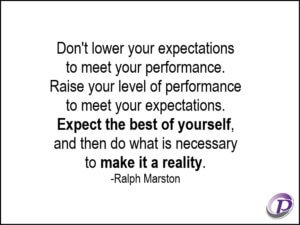
You Reveal Your True Expectations
You are probably unaware of this, but when you interact with your staff, you subtly expose your true expectations of them. As a manager or partner, your staff pick up what you expect of them, regardless of what you say. Whether your expectations are higher or lower, it comes through. Consequently, your staff tend to perform accordingly.
This is called the Pygmalion Effect, discovered and named by the researcher Robert Rosenthal. In essence, in his experiments in the late 60’s, and hundreds conducted since then, have shown this Effect to be true.
Your Expectations are Known
In his first experiments, he assigned rats to his lab assistants. The rats were identified as either smart or dumb. The students were unaware that he randomly assigned those labels—there were no smart or dumb rats. After the assistants worked with their rat to run the maze, Rosenthal tested the rats. Sure ‘nough, the rats labeled as smart outperformed the “dumb” rats. Interesting.
Then he wondered, if this was evident with rats in the lab, would it apply to students in the classroom? So he conducted some clever experiments with teachers being assigned to students who were labeled either smart or normal, again at random. And again, the students who were labeled as smart outperformed the normal students. The only variable was what the teachers were told about each student.
This experiment has been replicated in so many different environments, including the boss/employee relationships. Guess what? It’s true there also, following the same pattern. Just like the lab assistants and teachers, once the supervisors made a judgment about their subject, they inadvertently communicated their higher or lower expectations of them. Their employees performed as expected.
Your Expectations Matter
Leaders, believe in your people. They can and will learn and perform at higher levels with higher expectations. Don’t fall for the myth that “I treat my staff the same, so it must be them.” That may be a part of it, but so are your interactions you have with them. You have opinions and expectations of all your direct reports and they come through enough to significantly influence their performance. Your micro-messages are felt more than they are heard, but they communicate your perspective loud and clear.
With the current employee environment where staff shortages are exacerbated by lack of engagement and turnover, leaders must step up to learn and apply the skills that produce performers that perform up to high standards. That’s the job of a 21st century manager and partner. This is your opportunity to develop yourself so you can grow your people.
Read Related Blogs:
When Everything Feels Urgent
As another deadline gets closer, there’s no shortage of things that feel urgent. A client needs something. A return needs review. A staff member has a question. Someone is behind. And suddenly, everything feels like it needs your attention right now. This is where...
Capacity Is a Leadership Skill
As another tax deadline approaches, capacity is an overarching theme in my coaching calls, and probably a familiar conversation in your firm. I’m hearing We just need more people, and We need better technology, or We just need to get through this deadline. Sometimes,...
Sometimes the Best Development Happens in the Moment
I was coaching a firm Partner recently about one of her managers. She’s smart, technically strong, gets her work done, and the firm sees a lot of potential in her. But the Partner was frustrated because she wasn’t really stepping into leadership. My first question...

