

1 min readAccountability Is The Second Option
by Guy Gage | August 20, 2023 | Business, Leadership, Personal Management

No One Likes It
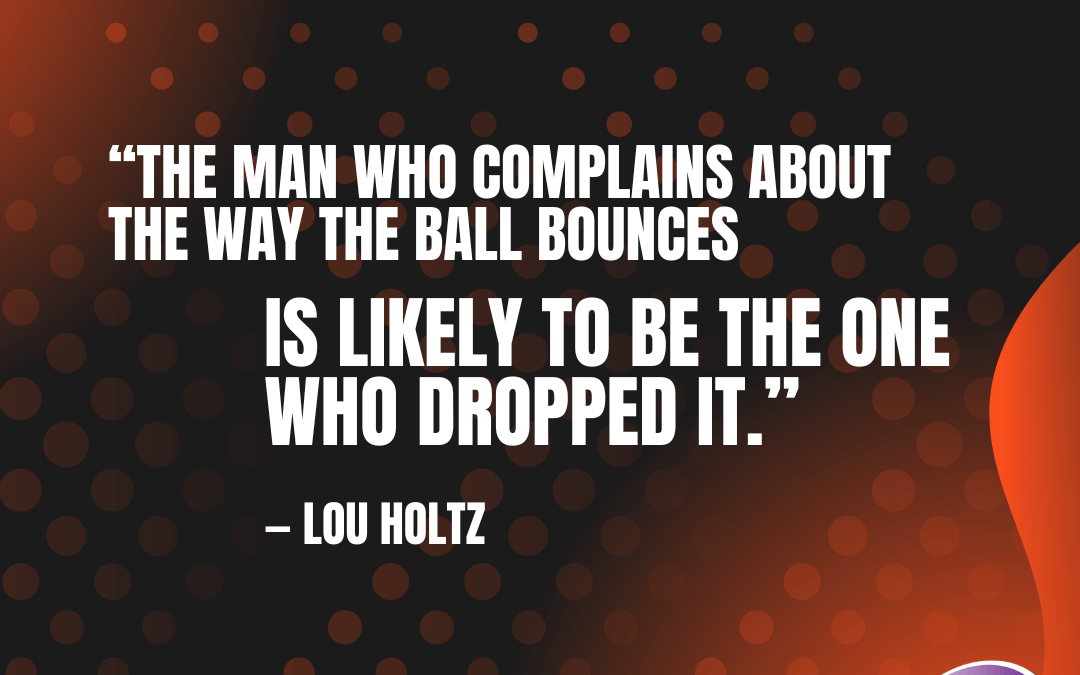
Don’t you hate it when you have to hold someone accountable? Or worse, when you are being held accountable? It’s not pleasant on either side of the table. That’s why accountability should be the second option.
Most Need It
Much has been said, written and practiced regarding accountability. The lack of accountability is often cited as a major reason why partnerships are ineffective and underperform.
As a result, we have training on how to hold others accountable. We track, monitor and measure in order to know when to hold someone accountable. For some unfortunate souls, holding others accountable is a part of their job–but hardly ever a favorite part. I once heard of a suggestion that their firm should hire a Chief Accountability Officer who would hold everyone accountable for everything. I’m not sure I would want anyone who would apply for the job.
I remember being tasked with making sure that everyone entered their time daily. First thing in the morning, I ran a report to determine who didn’t get their time in the day before. The calls, emails and office visits were awful. Fortunately, after a couple of weeks, a partner questioned if this was the best use of my time and I was released from the task.
What It Is
With all this emphasis on accountability, what is it? Being held accountable is simply an external effort to get people to do what they committed to do. It comes from the outside and it interferes with someone’s desire for autonomy. That’s why no one likes accountability. It only becomes necessary when there is a break in someone’s credibility (failing to do what they say)
Of course, being held accountable often elicits defensiveness and other self-protective behavior because it is a public display of a personal failing. Basically, it’s putting someone in the hot seat to remind them they failed to follow through on something they committed to do.
How To Avoid It
So, if you dislike being held accountable, do what you agreed to do. If you are true to your word, you will no longer have to be held accountable. Only when you ignore or shun personal responsibility is accountability necessary. By doing so, you will relieve someone of the unpleasant task of calling you on your failing. And there will be no need for a CAO in the C-suite.
That’s why accountability is the second option.
Read Related Blogs:
Sometimes the Best Development Happens in the Moment
I was coaching a firm Partner recently about one of her managers. She’s smart, technically strong, gets her work done, and the firm sees a lot of potential in her. But the Partner was frustrated because she wasn’t really stepping into leadership. My first question...
The Professional Skills Advantage
For years, the accounting profession has focused on becoming more efficient. Don’t get me wrong, efficiency matters. Technology is helping us automate work, analyze information and do more in less time. But efficiency alone isn’t going to build the firms we want for...
Stop Giving It Away
Don’t you hate it when someone asks you a question, looking to get something for no charge? You know the answer to their question and you’d like to help. But you also feel taken advantage of. But you may not realize that you have done this to yourself for as long as...

